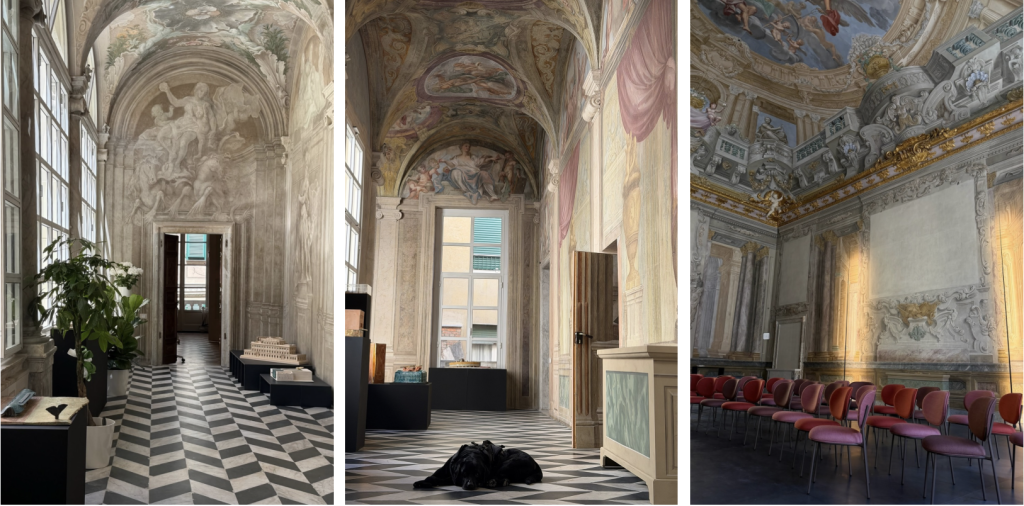
zdjęcia: wizyta w biurze Alfonso Femia, Genua 2026
Drzwi jednego z pałaców rolli* otwierają się i pierwsze, co widzimy, to czarny labrador leżący na posadzce. Nie podnosi głowy. Sceneria wokół niego zwala z nóg – on już dawno się do niej przyzwyczaił.
My podnosimy głowę za niego. Zamiast kamienia i zwykłego sufitu widzimy unoszące się postacie, chmury, niebo, draperie faliste od nieistniejącego wiatru. Domenico Piola i inni mistrzowie baroku malowali W Genui sufity tak, żeby znikały. To quadratura, czyli iluzja, która oszukuje oko od trzystu lat.
Pod tym niebem dziś pracuje Alfonso Femia.
“Każdy projekt jest spotkaniem dwóch dusz: duszy miejsca i duszy człowieka.” – Alfonso Femia
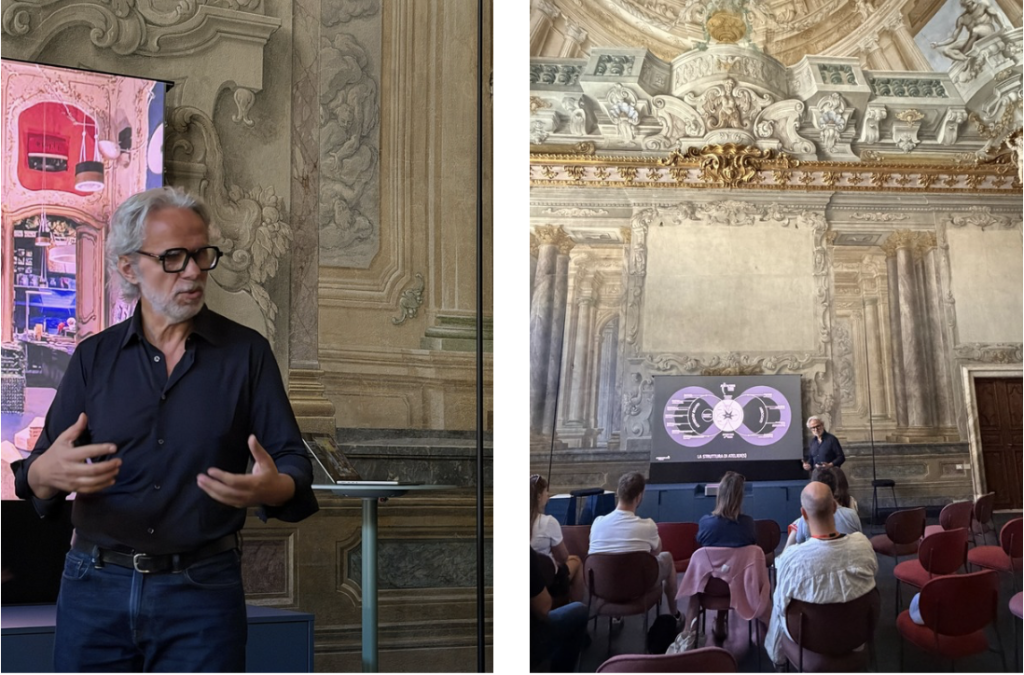
Alfonso Femia pochodzi z Kalabrii, ale dyplom architektury obronił na Uniwersytecie w Genui. Od 1995 prowadzi Atelier(s) Alfonso Femia, które dziś działa jednocześnie w Genui, Mediolanie i Paryżu. Atelier a nie studio? Skąd nazwa?
Nazwa „atelier” nie jest przypadkiem. Femia świadomie unika słowa „studio”, które jest zbyt biurowe, zbyt zamknięte w czterech ścianach z rysunkami. Atelier to warsztat w starym, francuskim sensie: miejsce, gdzie rzemiosło spotyka myśl, gdzie coś powstaje rękami, nie tylko na ekranie. Stąd też trzy miasta zamiast jednego adresu – Genua, Mediolan, Paryż, jakby sama architektura miała dla niego sens tylko wtedy, gdy przekracza granicę.
Siedzieliśmy pod freskami, a Alfonso mówił o architekcie: nie jako o zawodzie, tylko o kimś, kto musi umieć widzieć inaczej niż inni – o różnicy między tym, co się widzi, a tym, co się rozumie. I przede wszystkim o granicach, które trzeba przekroczyć, żeby cokolwiek nowego powstało.
„Architektura to sztuka granic – a ich przekraczanie jest epifanią. To przestrzeń intuicji, odkrycia, zaskoczenia: przekroczenie, które jest zarazem geograficzne.” – Alfonso Femia
I’m an architect
Żaden projekt nie zaczyna się od zera, a każdy budynek to kolejny rozdział tej samej, nieprzerwanej księgi. Jako architekt patrzysz na miejsce, słuchasz ludzi, zadajesz pytania, a to, co usłyszałeś przy poprzednim projekcie, nigdy naprawdę nie znika. Kumuluje się, buduje warstwę na warstwie.
Ale najciekawsze jest to, co Femia mówi o teraźniejszości…. że trzeba się z nią pokłócić. Architekt, który tylko słucha i potakuje trendom, nie projektuje niczego nowego, tylko powtarza to, co już jest. Prawdziwy projekt zaczyna się dopiero tam, gdzie ktoś ma odwagę powiedzieć „nie” temu, co oczywiste.
Femia czerpie ze sztuki, fotografii, literatury, muzyki, ceramiki , z niczego pojedynczego, ale ze wszystkiego naraz. Dlatego jego budynki trudno wrzucić do jednej szufladki: nie trzymają się jednego stylu, bo on sam nigdy nie trzymał się jednej dziedziny.
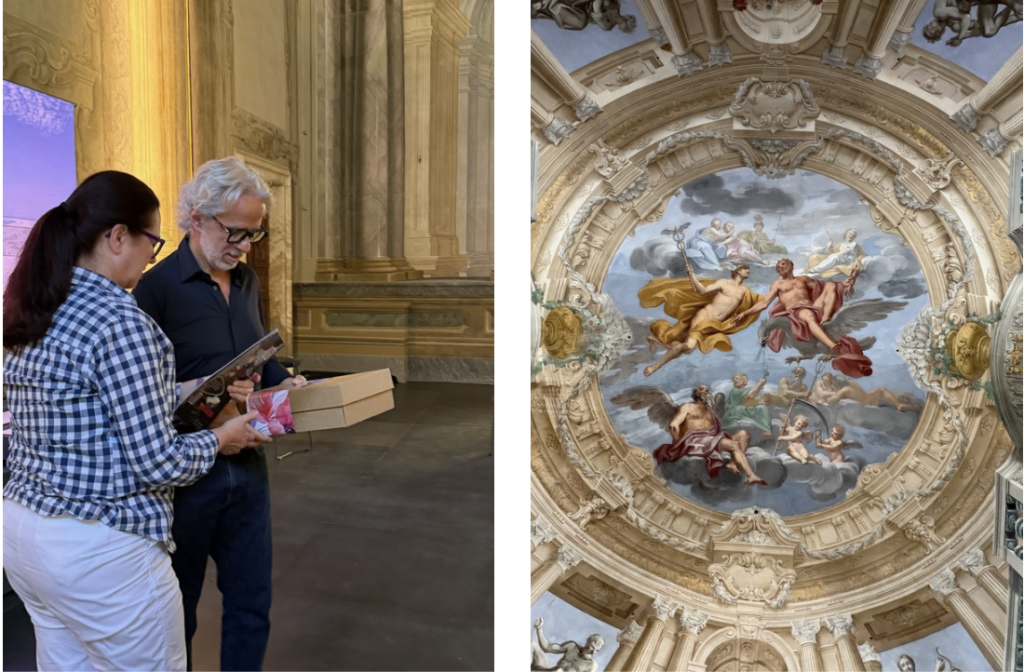
zdjęcia: Slow Italia, wizyta w biurze Alfonso Femia
Les Docks – architektura, która opowiada historię miasta
Sto lat temu to był magazyn portowy w Marsylii – zamknięty, niedostępny Femia go rozciął i zamienił w tętniące życiem centrum: prześwity, przejścia, wewnętrzne dziedzińce, kilkadziesiąt sklepów i restauracji tam, gdzie stały kiedyś skrzynie towarów. Na fasadzie od strony miasta – ponad trzydzieści tysięcy metalowych liter. Cycero, Cezar, Balzac, Hemingway, Ben Jelloun. Cała fasada to jeden długi cytat o mieście.
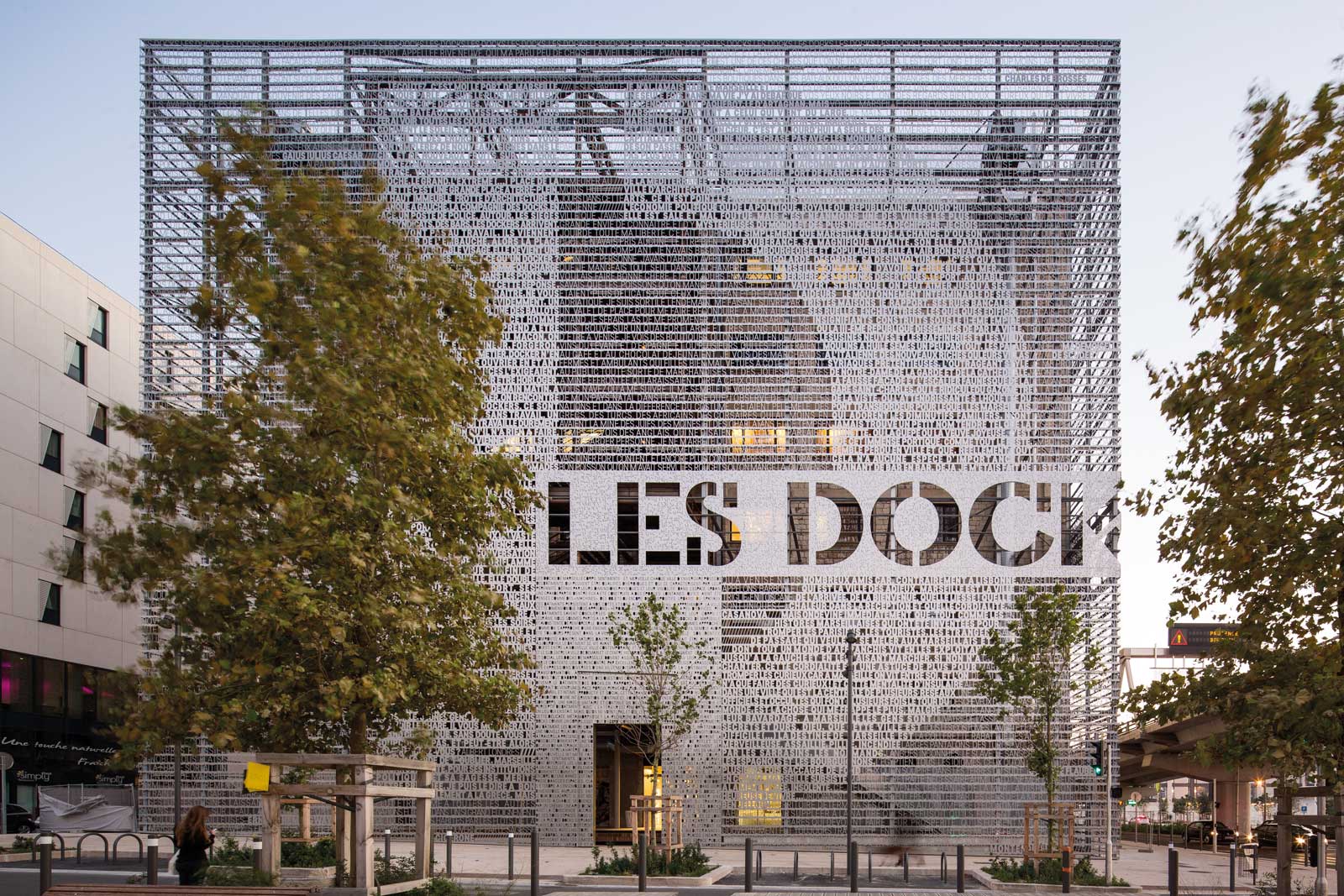
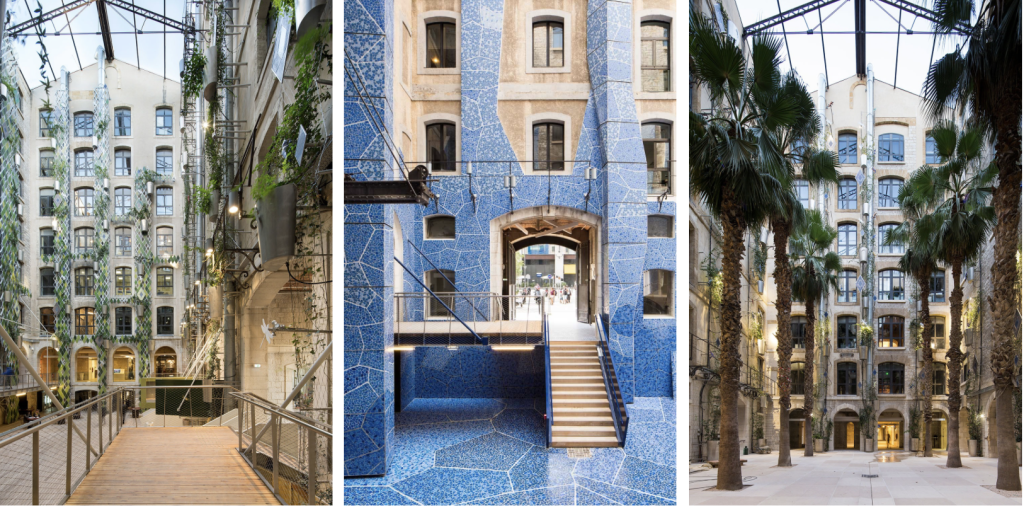
zdjęcia: Marseille, Les docks
Multicampus – architektura, która buduje relacje
Uniwersytet Wschodniego Piemontu budował dotąd wydziały osobno – każdy w swoim budynku. Femia postawił na coś więcej niż sale wykładowe: jeden kampus, w którym trasa na wykład prowadzi obok kawiarni i ławki. Rozmowa przy stole ma tu być tak samo częścią studiowania, jak sam wykład.
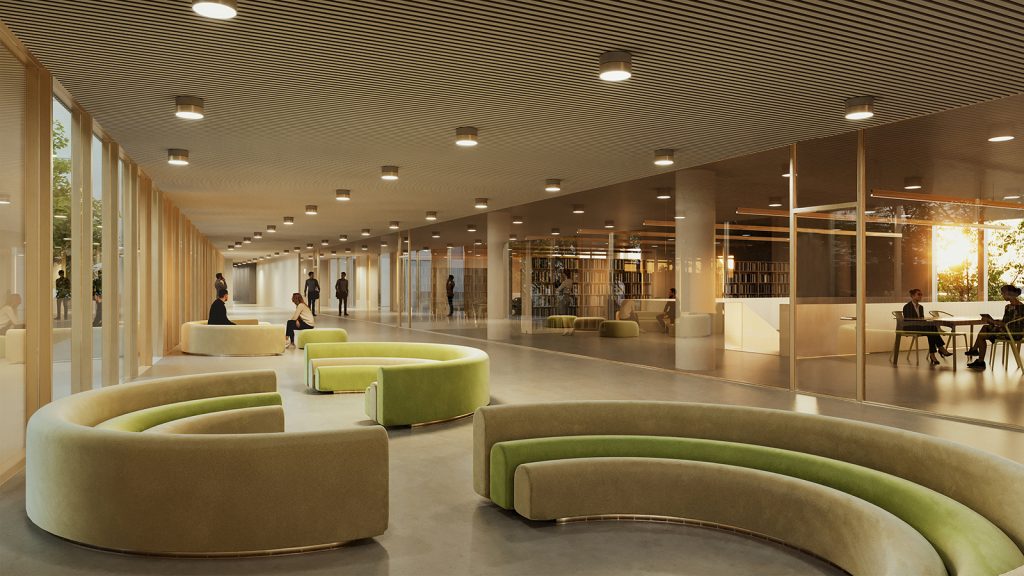
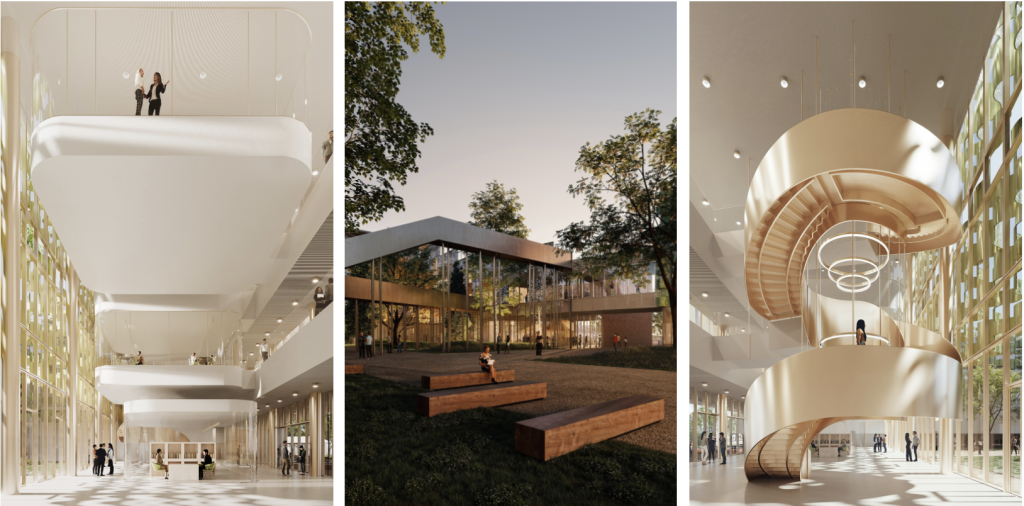
zdjęcie: Multicampus
Space for Nice Ideas – architektura w ruchu
Centrum badawcze w Nicei – bryły zostały ustawione nie w rządku, tylko przesunięte względem siebie, każda pod trochę innym kątem. Domino? Stąd biorą się tarasy między nimi i światło, które wpada inaczej niż w zwykłym prostopadłościanie. Femia budował je z myślą o czymś więcej niż o laboratoriach do wynajęcia – to miejsce, które ma dawać przestrzeń do pracy, myśli i dobrych rozmów.
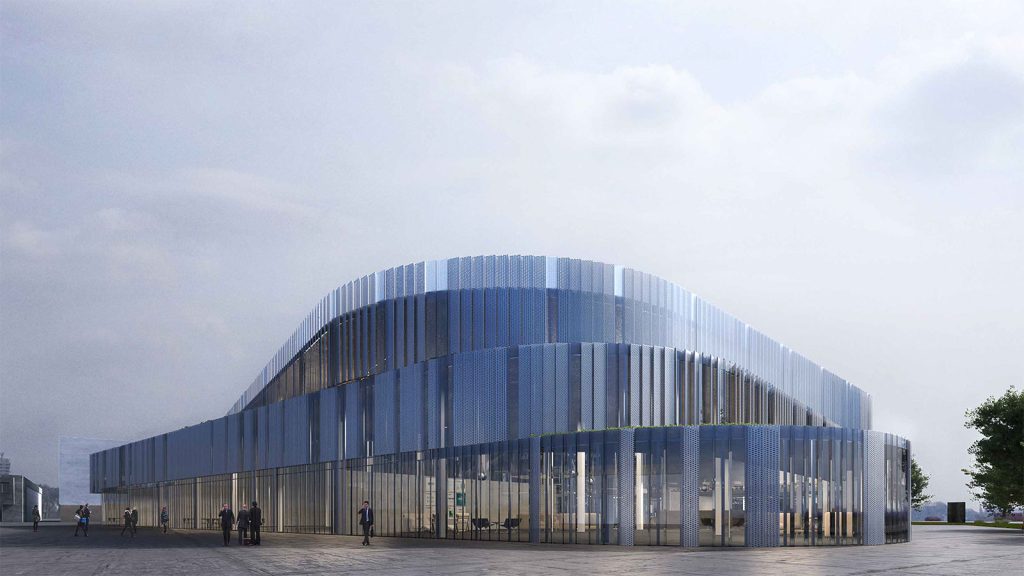
zdjęcie: Space for Nice Ideas
Wychodzimy z atelier, przez te same drzwi. Labrador wciąż leży w tym samym miejscu, głowy nie podnosi. I już wszystko staje się jasne, dlaczego Femia akurat tu urządził atelier. Piola przekroczył granice pędzlem. Femia robi to samo – tylko że jego narzędziem jest cały budynek.
Dziękujemy ogromnie za ciepłe przyjęcie, poświęcony czas i inspirującą rozmowę.
*Palazzi dei Rolli to wyjątkowy system pałaców należących do genueńskiej arystokracji. Zamiast budować królewskie rezydencje dla oficjalnych gości, Republika Genui wykorzystywała prywatne pałace swoich mieszkańców. Dziś są jednymi z największych skarbów Genui i zostały wpisane na Listę Światowego Dziedzictwa UNESCO.
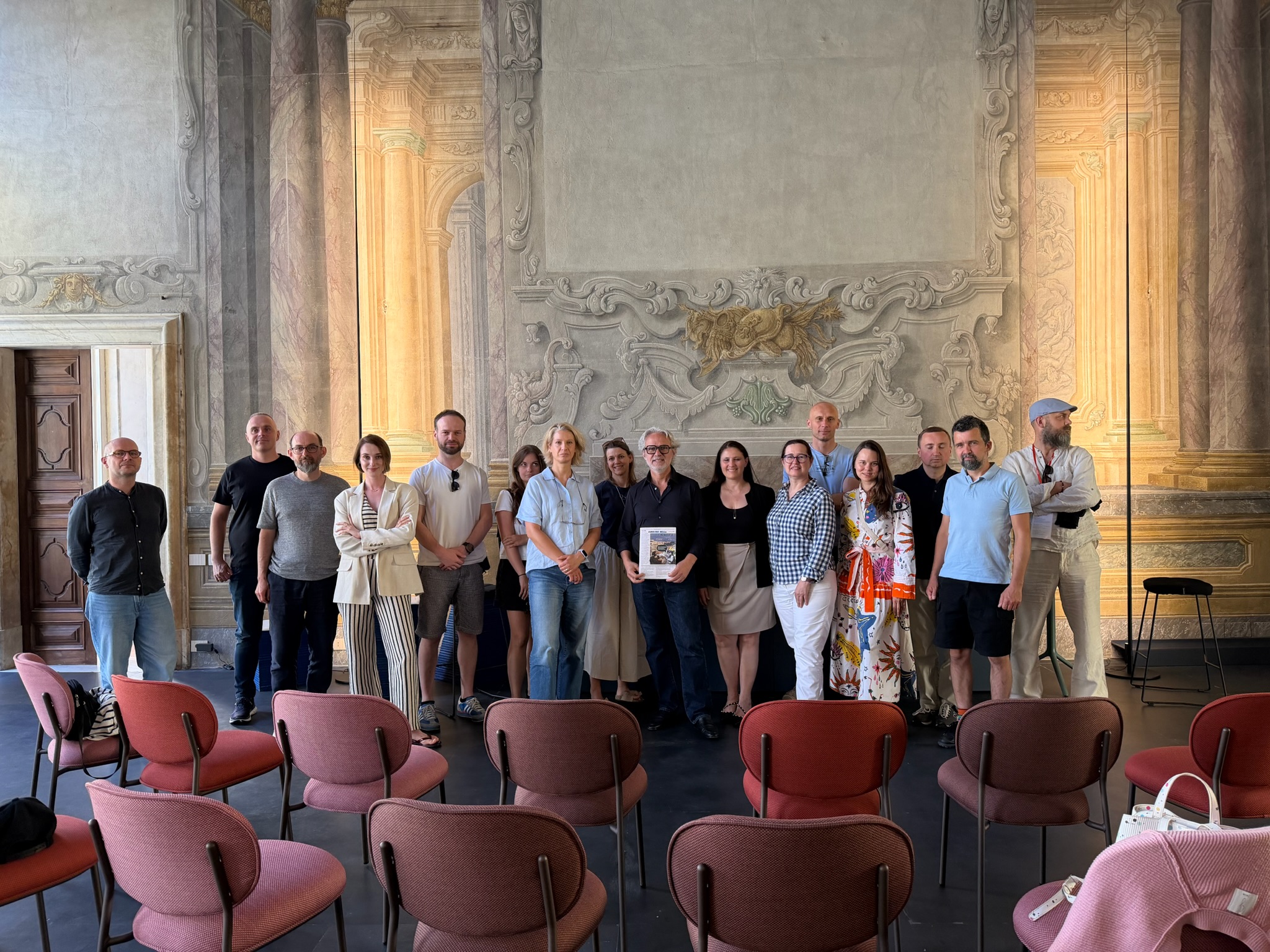
zdjęcia: Slow Italia, spotkanie w biurze Alfonso Femia, 2026
Zaplanuj i zaproś swoich architektów na kilkudniową podróż doświadczeniową ze Slow Italia.
| ENGLISH VERSION |
„I’m an architect.” – Alfonso Femia
The doors of one of Genoa’s Palazzi dei Rolli* open, and the first thing we see is a black Labrador lying quietly on the stone floor. He doesn’t even lift his head. The scenery around him is breathtaking — but he’s long since grown used to it.
So we look up for him.
Instead of a plain stone ceiling, we see floating figures, clouds, open skies and draperies rippling in an imaginary breeze. Three hundred years ago, Domenico Piola and other Baroque masters painted these ceilings to disappear. It’s called quadratura — an illusion that has been deceiving the eye for centuries.
Beneath this painted sky, Alfonso Femia works today.
„Every project is the meeting of two souls: the soul of the place and the soul of the person.” – Alfonso Femia
Alfonso Femia was born in Calabria but graduated in architecture from the University of Genoa. Since 1995, he has led Atelier(s) Alfonso Femia, which today operates in Genoa, Milan and Paris.
The word atelier is no coincidence. Femia deliberately avoids the word studio, which feels too office-like, too confined within four walls filled with drawings. An atelier is a workshop in the old French sense of the word: a place where craftsmanship meets thought, where ideas are created by hand, not only on a screen. Perhaps that is also why there are three cities instead of one address — Genoa, Milan and Paris — as if architecture only truly makes sense when it crosses borders.
We sat beneath centuries-old frescoes while Alfonso spoke about the architect not as a profession, but as someone who must learn to see differently from everyone else. Someone who understands the difference between what we see and what we truly understand. Above all, he spoke about the boundaries that need to be crossed for anything genuinely new to emerge.
„Architecture is the art of boundaries — and crossing them is an epiphany. It is a space of intuition, discovery and surprise; a crossing that is also geographical.” – Alfonso Femia
„I’m an architect„
No project ever begins from scratch, and every building becomes another chapter in the same continuous story. As an architect, you observe a place, listen to people and ask questions. What you learn from one project never truly disappears. It accumulates, layer upon layer, becoming part of everything that follows.
Perhaps the most fascinating part, however, is what Femia says about the present: sometimes, you have to argue with it. An architect who simply follows trends without questioning them will never create anything new — only repeat what already exists. A true project begins the moment someone has the courage to say „no” to the obvious.
Femia draws inspiration from art, photography, literature, music and ceramics — never from a single discipline, but from all of them at once. That is why his buildings resist easy categorisation. They don’t belong to one style because he himself has never belonged to just one world.
PROJECTS
Les Docks – architecture that tells the story of a city
A hundred years ago, Les Docks was a closed port warehouse in Marseille. Alfonso Femia cut through it and transformed it into a vibrant public destination filled with passages, courtyards, shops and restaurants where crates of goods once stood. Facing the city, the façade is covered with more than thirty thousand metal letters quoting everyone from Cicero and Caesar to Balzac, Hemingway and Ben Jelloun. The building itself has become one long conversation with Marseille.
Multicampus – architecture that builds relationships
The University of Eastern Piedmont used to spread its faculties across separate buildings. Femia imagined something more than lecture halls: one campus where the walk to class naturally passes a café or a bench. Here, conversations around a table are intended to be just as important as the lectures themselves.
Space for Nice Ideas – architecture in motion
The new research centre for Nice is anything but static. Instead of lining up identical volumes, Femia shifted them, rotating each one ever so slightly. Like a row of dominoes, the buildings create terraces between them and allow light to enter from constantly changing angles. More than laboratories, this is a place designed to encourage work, reflection and meaningful conversations.
We leave the atelier through the very same doors. The Labrador is still lying in exactly the same spot, without lifting his head. And suddenly everything makes sense. Piola crossed boundaries with a paintbrush. Femia does the very same thing — only his medium is the building itself.
Thank you, Alfonso, for the warm welcome, your generosity with time, and for such an inspiring conversation.
*The Palazzi dei Rolli are a remarkable network of palaces once owned by Genoa’s aristocratic families. Rather than building royal residences for distinguished visitors, the Republic of Genoa hosted popes, ambassadors and princes in these magnificent private homes. Today, they are among the city’s greatest treasures and have been recognised as a UNESCO World Heritage Site.