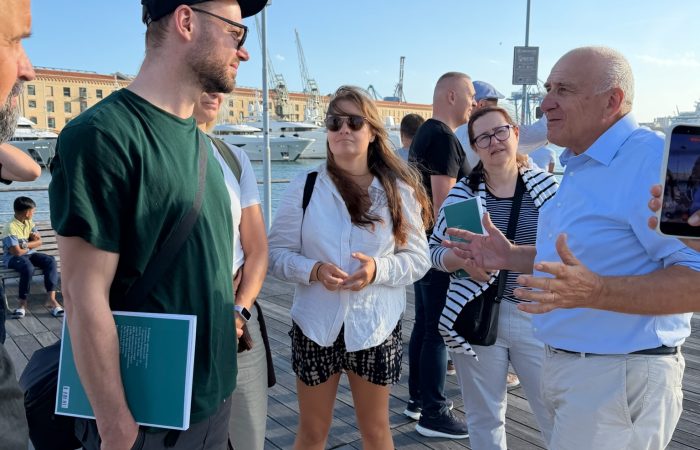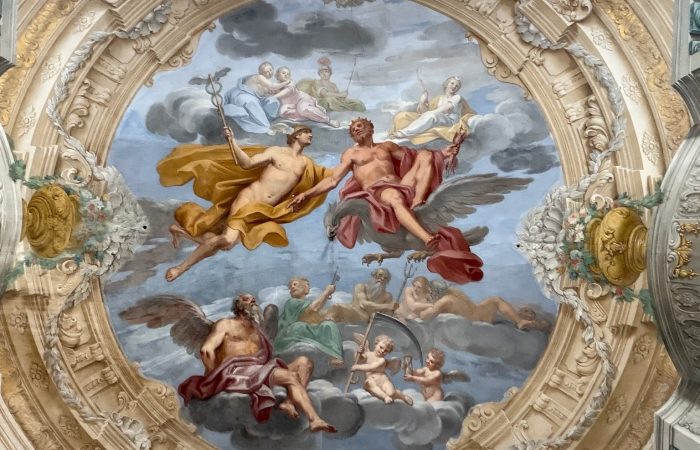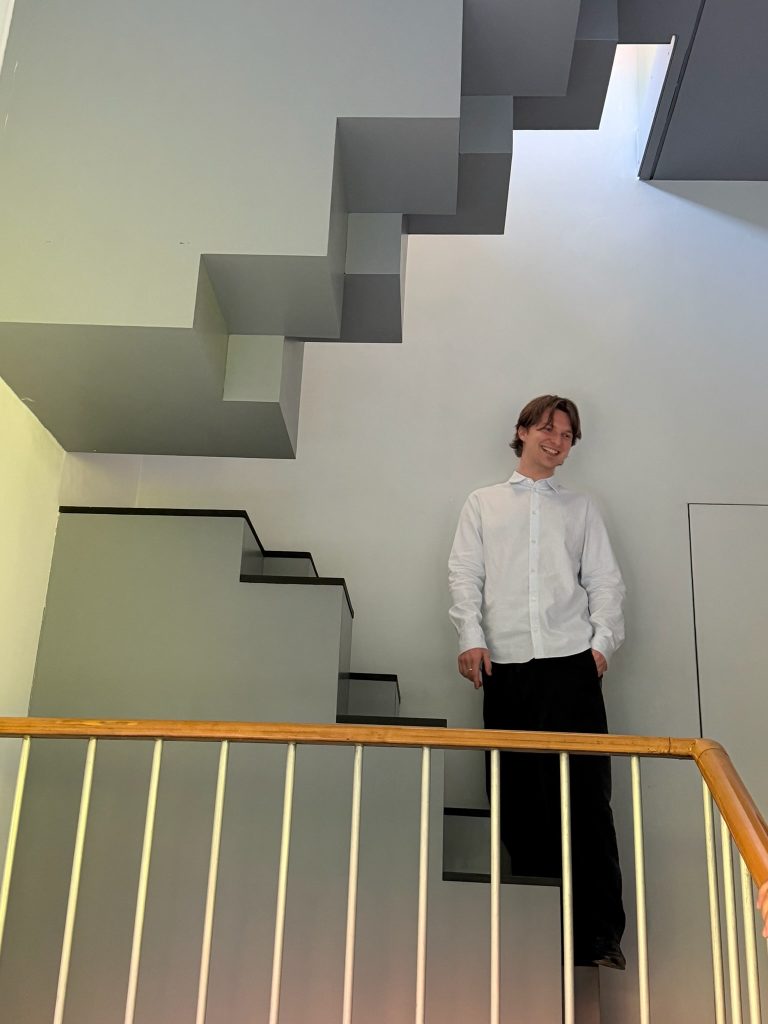
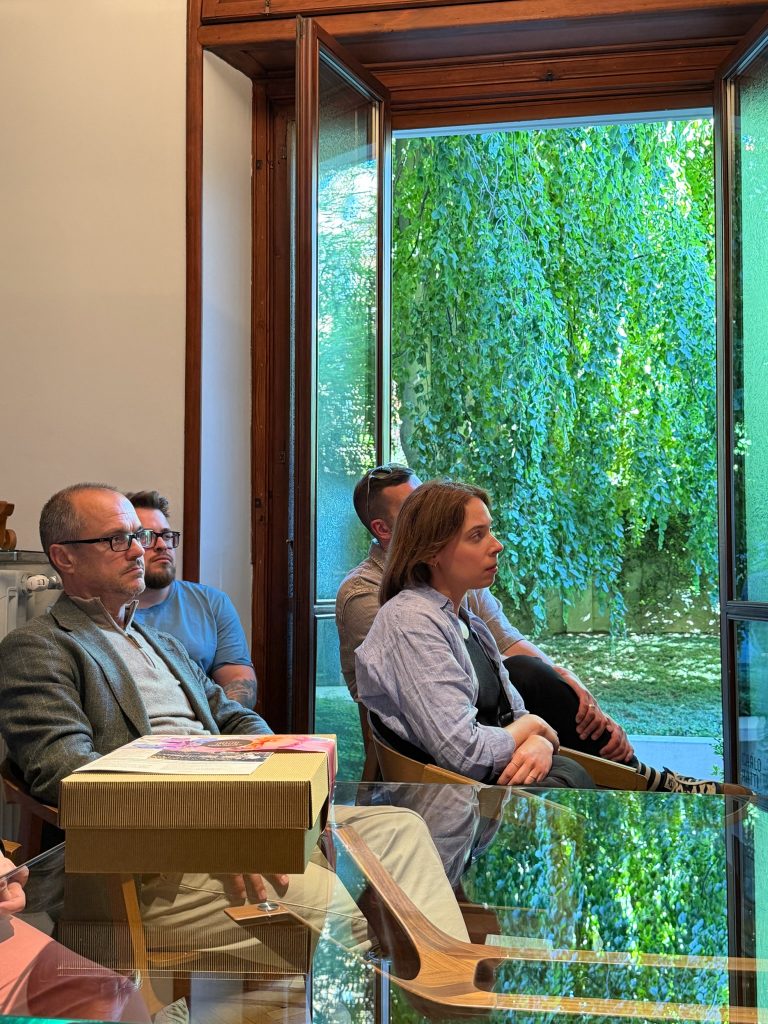
zdjęcia:ArchiTour, wizyta w biurze Carlo Ratti Associati, Tyrun 2026
W zeszłym miesiącu mieliśmy ogromną przyjemność odwiedzić studio, które trudno zaszufladkować – bo to nie tylko biuro architektoniczne, ale prawdziwy ekosystem innowacji, z własnymi startupami i badaniami na pograniczu technologii, klimatu i miasta. David Evans przywitał nas w drzwiach i od razu wprowadził w świat Carlo Rattiego — spójny, oryginalny, interdyscyplinarny, wciągający. Bo tu szybko staje się jasne: nie chodzi o budynki. Chodzi o procesy, które reagują na ludzi, klimat i świat w nieustannym ruchu.
„Architektura, która czuje i opowiada “ – Carlo Ratti
Carlo Ratti
Urodził się w Turynie. Studia na Politecnico di Torino, potem w Paryżu, doktorat w Cambridge – a dziś kieruje MIT Senseable City Lab i jest jednym z dziesięciu najczęściej cytowanych badaczy w dziedzinie urbanistyki na świecie. Pisze dla New York Timesa, Financial Timesa, Le Monde i Corriere della Sera. Występuje na TED.
A jednak serce nakazało mu powrót do rodzinnego Turynu, gdzie otworzył studio – dziś jedno z najbardziej rozpoznawalnych na świecie, projektujące dla Singapuru, Mediolanu, Dubaju czy Osaki.
W zeszłym roku objął rolę kuratora 19. Biennale Architektury w Wenecji, pod hasłem „Intelligens” — o tym, co znaczy inteligencja w architekturze i planowaniu miast. W 2026 roku jego biuro zaprojektowało pochodnie olimpijskie na Zimowe Igrzyska Milano–Cortina 2026.
Ratti traktuje miasto jak żywy organizm: reagujący, uczący się, oddychający danymi. Architektura w jego ujęciu nie kończy się na oddaniu budynku – zaczyna się wtedy, gdy zaczyna go używać człowiek.
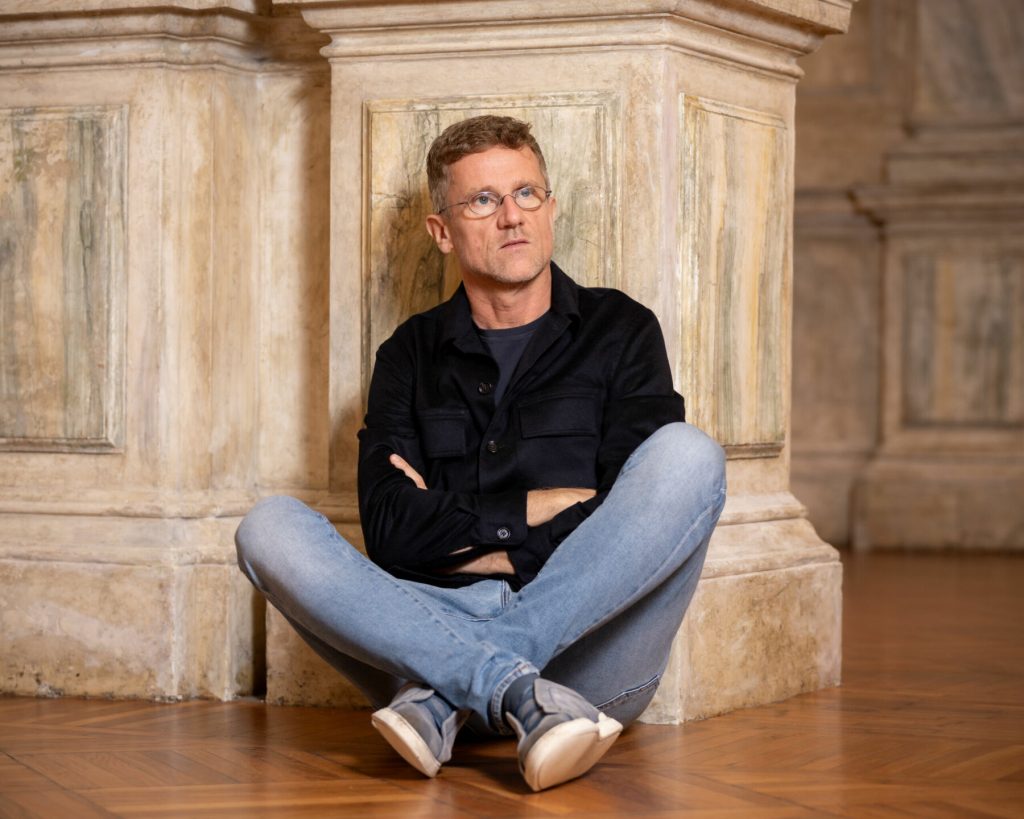
zdjęcie: Carlo Ratti
/ PRZESZŁOŚĆ
„Powiedziałam Carlo Rattiemu, że właśnie dla takich projektów zostałam architektką” — mówi Giulia, senior architekt w studiu Carlo Ratti Associati, opowiadając nam o jednym z najbardziej emocjonalnych projektów, w jakich brała udział. Projekt dotyczy miejsca, które przez dekady uchodziło za symbol porażki modernistycznych ambicji i społecznego wykluczenia — a staje się wzruszającą opowieścią warta wysłuchania.
Le Vele di Scampia to kompleks mieszkalny w Neapolu, wybudowany w latach 70. Z czasem stał się symbolem degradacji — to właśnie tu kręcono słynne sceny filmu „Gomorra”. Większość budynków stopniowo wyburzono. Ostatnia pozostała — tzw. Vela Celeste — zostanie zachowana i przekształcona w przestrzeń publiczną. I właśnie tu zespół Carlo Ratti Associati, w porozumieniu z miastem Neapol, postanowił zacząć od rozmowy. Architekci spotkali się z dawnymi mieszkańcami, dla których Le Vele, mimo wszystkich problemów dzielnicy, pozostawało przede wszystkim… domem.
Zamiast projektować „dla” mieszkańców, studio CRA wsłuchuje się w ich głosy, traktując wspomnienia i potrzeby jako punkt wyjścia do projektowania przyszłości. W tym procesie uczestniczy również sztuczna inteligencja — nie jako autor, lecz jako tłumacz zbiorowej wyobraźni. Projekt, zatytułowany „Vela Celeste: Reimagining Home”, został zaprezentowany na Biennale Architektury w Wenecji w 2025 roku. To wspaniała historia o tym, że architektura może powstawać nie tylko dla ludzi, ale także razem z nimi.
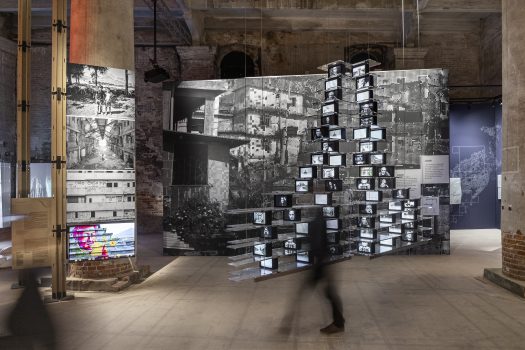
zdjęcie: Vela Celeste: Reimagining Home
TERAŹNIEJSZOŚĆ / Bo we Włoszech wszystkie drogi prowadzą do kuchni – projekt Giulio BattiFerri
A co zostaje po architekturze, gdy zniknie budynek? W przypadku House of Polpa odpowiedź jest zaskakująco prosta: obiad, a w zasadzie jego kluczowy składnik – baza do polpa al pomodoro!
Podczas Milan Design Week 2026 studio stworzyło instalację złożoną z 20 tysięcy puszek pomidorów Mutti! Zawieszone na stalowym szkielecie tworzyły czerwony, pomidorowy tunel, w którym można było poczuć ich zapach!
Jak każdy „produkt” miał określoną datę ważności. Po zakończeniu wystawy odwiedzający mogli zabrać puszki do domu, a architektura zaczęła dosłownie znikać na oczach zwiedzających — tak jak pyszne spaghetti al pomodoro, które znika z talerza. Kilka dni później po instalacji został jedynie szkielet, a jej ściany prawdopodobnie bulgotały już w garnkach gdzieś we Włoszech!
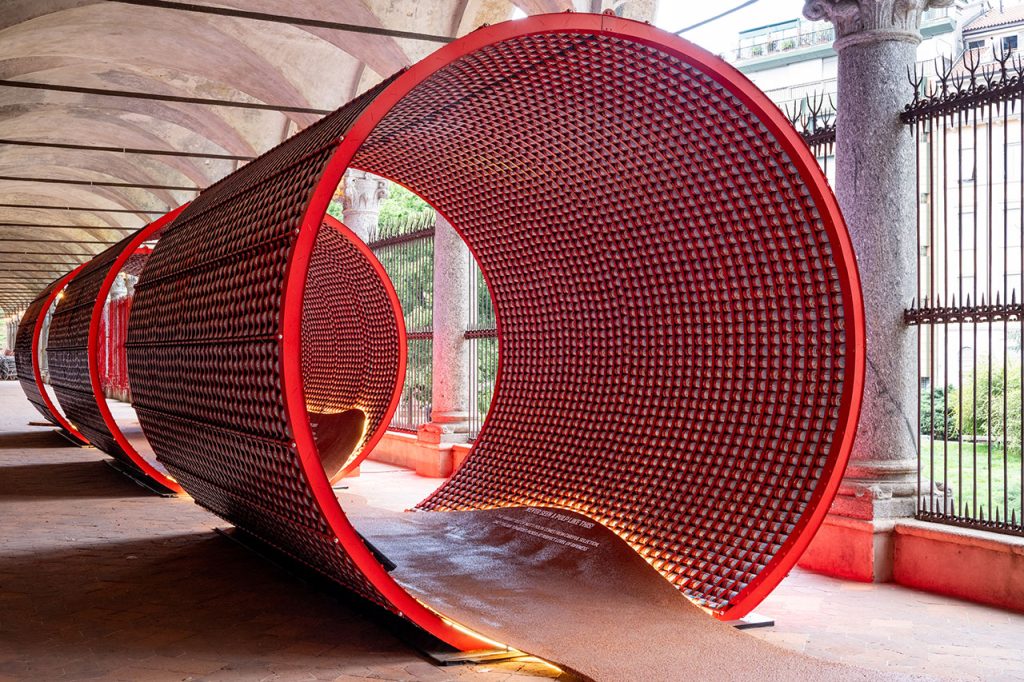
zdjęcie: Mutti House of Polpa
PRZYSZŁOŚĆ / Plac, który nie stoi w miejscu – Gizem Veral
Carlo Ratti lubi rzeczy, które nie są oczywiste… A gdyby tak skonstruować plac miejski, który nie stoi na ziemi? AquaPraça to pływająca piazza – przestrzeń publiczna, która unosi się i opada wraz z poziomem wody.
Zamiast walczyć z naturą, może lepiej się jej dostosować?
Projekt zadebiutował w Wenecji, a następnie popłynął do Brazylii, gdzie będzie udawać plac miejski i przypominać, że zmiana poziomu morza nie jest teorią. AquaPraça nie udaje stabilności — przeciwnie, pokazuje, że architektura może uczyć się reagowania na zmiany.
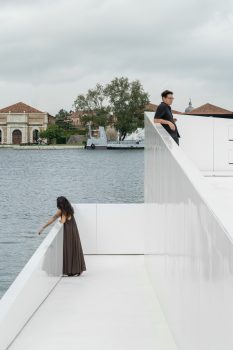
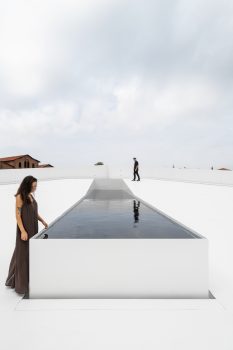
zdjęcie: AquaPraça: A Floating PLAZA
Giulia, Giulio, David, Gizem – dziękujemy Wam za tak otwarte i miłe powitanie, za czas i za te emocje, z jakimi opowiadaliście o swoich projektach. Carlo, masz fantastyczny zespół! Dziękujemy za wizytę.
Wyjeżdżaliśmy z głowami pełnymi pytań … a to zawsze najlepszy znak.
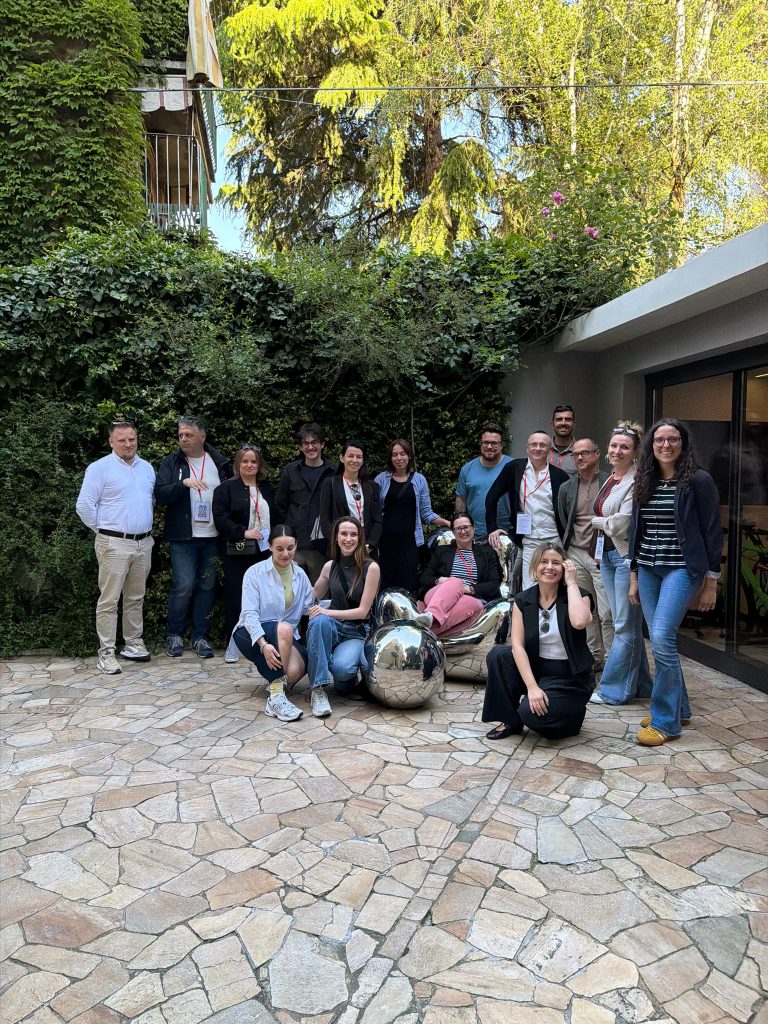
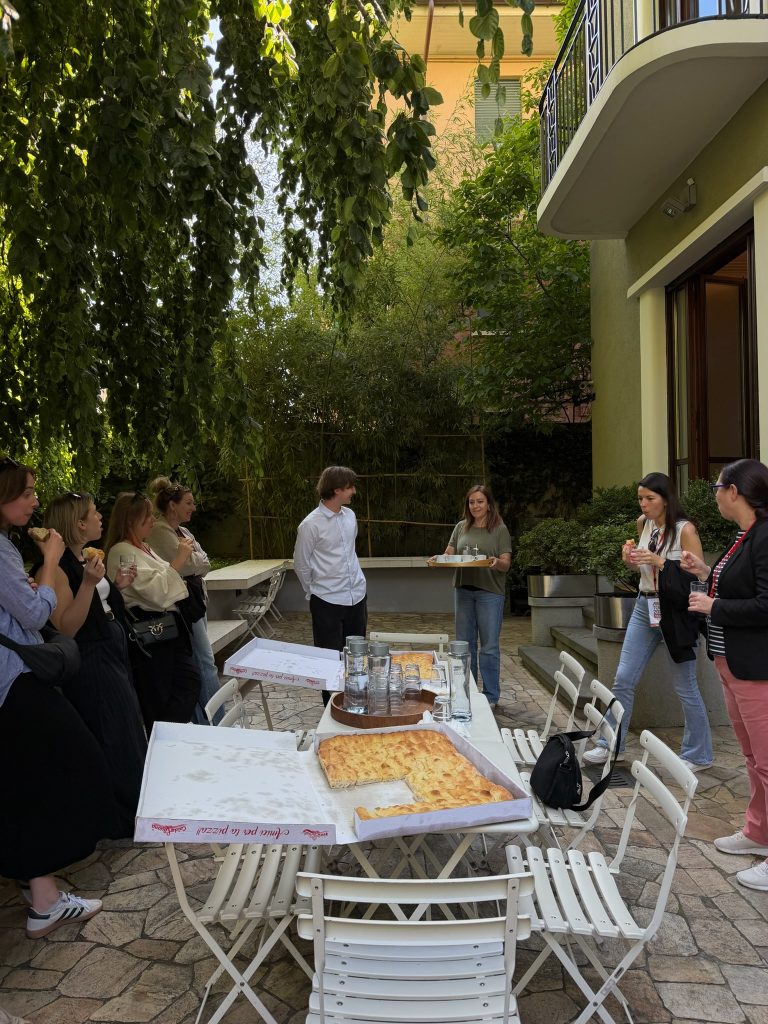
zdjęcia: Slow Italia, spotkanie w biurze Carlo Ratti, 2026
W 2026 zaplanuj i zaproś swoich architektów na kilkudniową podróż doświadczeniową ze Slow Italia.
| ENGLISH VERSION |
Past, Present, Future — a visit to Carlo Ratti’s studio
Last month we had the great pleasure of visiting a studio that is difficult to classify — because it is not only an architecture office, but a real ecosystem of innovation, with its own startups and research at the intersection of technology, climate and the city. David Evans welcomed us at the door and immediately introduced us to the world of Carlo Ratti — coherent, original, interdisciplinary, and engaging. Because here one thing quickly becomes clear: it is not about buildings. It is about processes that respond to people, to climate, and to a world in constant movement.
„Architecture that feels and tells stories” — Carlo Ratti
Carlo Ratti
He was born in Turin. He studied at Politecnico di Torino, then in Paris, and completed his PhD in Cambridge. Today he leads the MIT Senseable City Lab and is one of the ten most cited researchers in urban studies worldwide. He writes for The New York Times, Financial Times, Le Monde, and Corriere della Sera. He also speaks at TED.
And yet, something brought him back to his hometown of Turin, where he opened his studio — now one of the most internationally recognised, designing for Singapore, Milan, Dubai, and Osaka.
Last year he served as curator of the 19th International Architecture Exhibition of La Biennale di Venezia, under the theme “Intelligens” — exploring what intelligence means in architecture and urban planning. In 2026, his office designed the Olympic torches for the Milano–Cortina Winter Games.
Ratti treats the city as a living organism: reactive, learning, breathing data. In his understanding, architecture does not end when a building is delivered — it begins when it is used by people.
PROJECTS
/ PAST
“I told Carlo Ratti that this is exactly the kind of project that made me become an architect,” says Giulia, senior architect at Carlo Ratti Associati, while telling us about one of the most emotional projects she has worked on. The project concerns a place that for decades stood as a symbol of failed modernist ambition and social exclusion — and is now becoming a story worth listening to.
Le Vele di Scampia is a residential complex in Naples, built in the 1970s. Over time it became a symbol of decay — it is even known from the famous film Gomorrah. Most of the buildings have gradually been demolished. The last remaining one — the so-called Vela Celeste — will be preserved and transformed into a public space.
And this is where Carlo Ratti Associati, together with the Municipality of Naples, decided to start with a conversation. The architects met former residents for whom Le Vele, despite all the problems of the district, remained above all… a home.
Instead of designing for residents, CRA listens to their voices, treating memories and needs as a starting point for designing the future. In this process, artificial intelligence is also involved — not as an author, but as a translator of collective imagination.
The project, titled “Vela Celeste: Reimagining Home”, was presented at the Venice Architecture Biennale 2025. It is a powerful story about how architecture can be created not only for people, but also with them.
/ PRESENT — Because in Italy all roads lead to the kitchen (Giulio Battiferri project)
What remains of architecture when a building disappears? In the case of the House of Polpa, the answer is surprisingly simple: lunch — or more precisely, its key ingredient: a base for polpa al pomodoro.
During Milan Design Week 2026, the studio created an installation made of 20,000 cans of Mutti tomatoes. Suspended on a steel structure, they formed a red, tomato tunnel where you could actually smell the tomatoes.
Like any “product”, it had an expiration date. After the exhibition, visitors could take the cans home, and the architecture literally began to disappear before their eyes — like spaghetti al pomodoro vanishing from a plate. A few days later, only the structure remained, while its walls were probably already simmering in pots somewhere in Italy.
/ FUTURE — A plaza that does not stay still (Gizem Veral)
Carlo Ratti likes things that are not obvious… What if we designed a city square that does not stand on land? AquaPraça is a floating piazza — a public space that rises and falls with the water level.
Instead of resisting nature, maybe we should adapt to it.
The project debuted in Venice and later travelled to Brazil, where it will function as a city square and a reminder that sea level change is not a theory. AquaPraça does not pretend to be stable — on the contrary, it shows that architecture can learn how to respond to change.
Giulia, Giulio, David, Gizem — thank you for such a warm welcome, for your time, and for the way you shared your projects with us. Carlo, you have an exceptional team. Thank you for the visit.
We left with our heads full of questions… and that is always the best sign.